How Long Does a Water Heater Last in Clarksville's Hard Water?
Lifespans are ranges, not promises — and in Clarksville, maintenance moves a heater from the short end of the range to the long end.
Clarksville, TN · Mon–Fri 7AM–7PM · Sat 8AM–4PM · 24/7 emergency dispatch
Typical lifespans
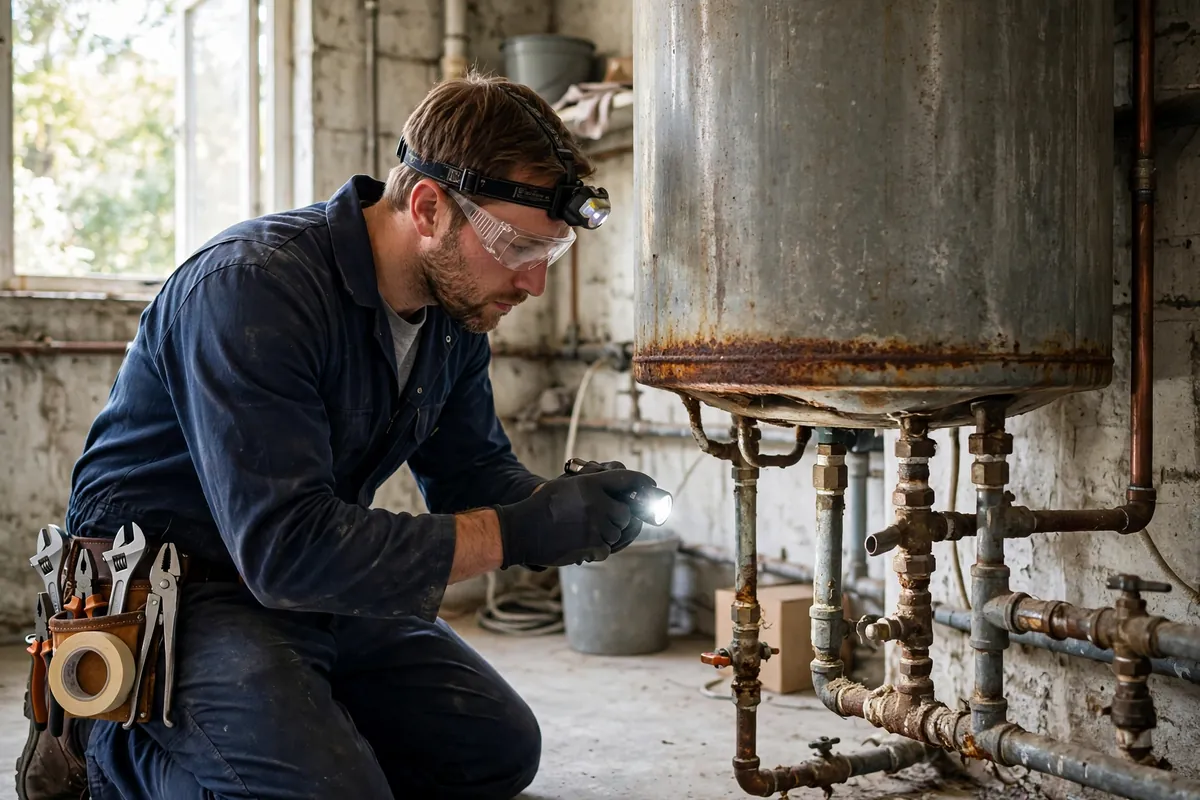
Storage tanks commonly last roughly 8–12 years; tankless units often last longer, roughly 15–20 years with descaling; hybrid units sit in a similar long band when their heat-pump side is maintained. These are industry-typical ranges, not guarantees for any individual unit — installation quality, water conditions, and maintenance move a unit within or beyond its range.
Why Clarksville shortens life
Mineral sediment insulates tank heat sources, coats elements, and scales tankless exchangers. A tank that is never flushed in Clarksville water works harder every year and dies sooner; a tankless unit that is never descaled throws error codes and overheats. The water is not uniquely harsh — limestone geology is common across Middle Tennessee — but it is consistent, and consistency is what wears heaters down.
The two levers you control
Annual flushing or descaling is the first lever: it removes the sediment and scale that cause most premature failures. Anode-rod replacement on schedule is the second: it keeps the tank lining protected from rust. Together they are the cheapest life-extension available, and they are the first things we check on an ageing unit.
When age alone should not decide
A well-maintained 11-year-old tank with a sound body and a fresh anode may be worth a small repair; a neglected 7-year-old tank with rust and repeated failures may not. We judge by condition — leaks, corrosion, repair history, sediment load — not by the calendar alone, and we show you the evidence.