Tank is 3–5+ years old, anode never checked
Age alone is the best predictor — rods are consumed on a schedule, not on symptoms.
The anode rod is the cheapest part in your water heater and the one that saves the tank itself. It corrodes so the steel tank doesn't have to — and once it's gone, the tank starts rusting.
Clarksville, TN · Mon–Fri 7AM–7PM · Sat 8AM–4PM · 24/7 emergency dispatch
Clarksville Water Heater Repair
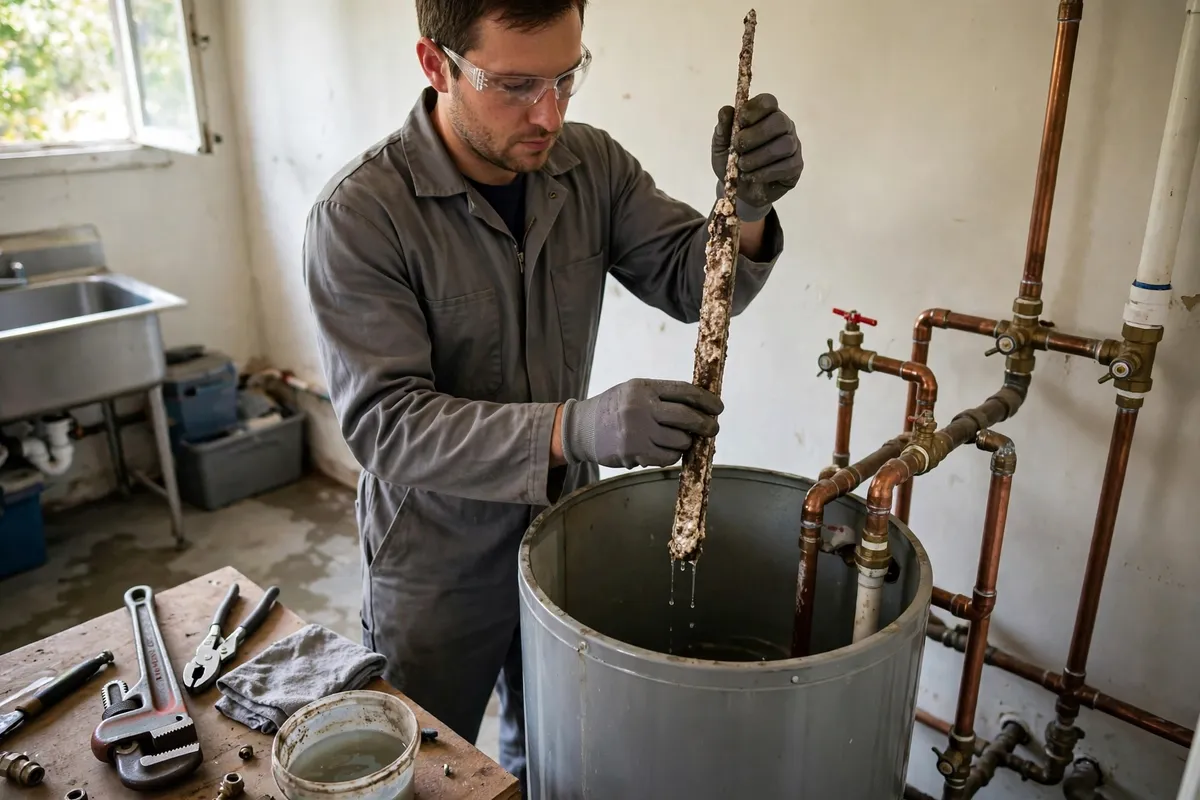
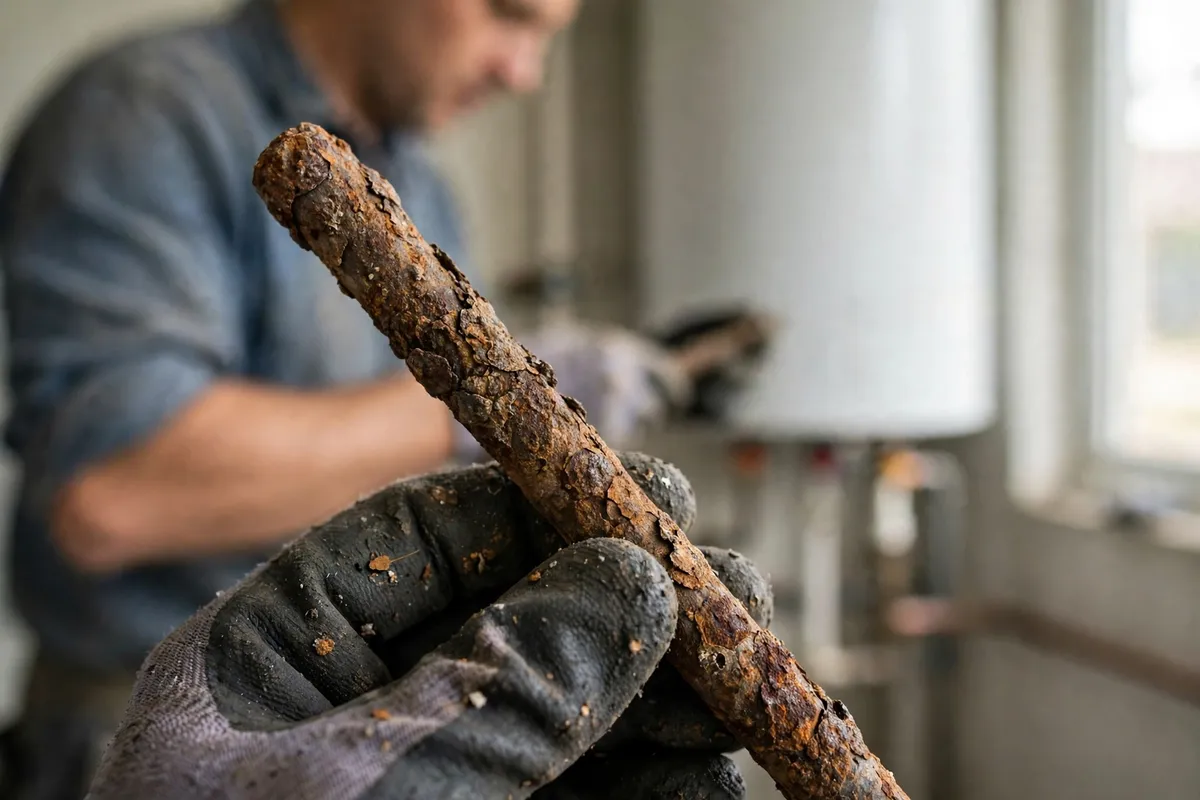
Inside every storage-tank heater is a long magnesium or aluminium rod, threaded into the top of the tank. Its job is electrochemical: it corrodes preferentially, so the steel tank lining is protected from rust. That is why it is called 'sacrificial' — it is designed to be consumed, usually over three to five years, faster in mineral-heavy water. When it is gone, nothing protects the tank, and rust starts on the steel itself. By the time rust shows in your hot water, the tank is already damaged.
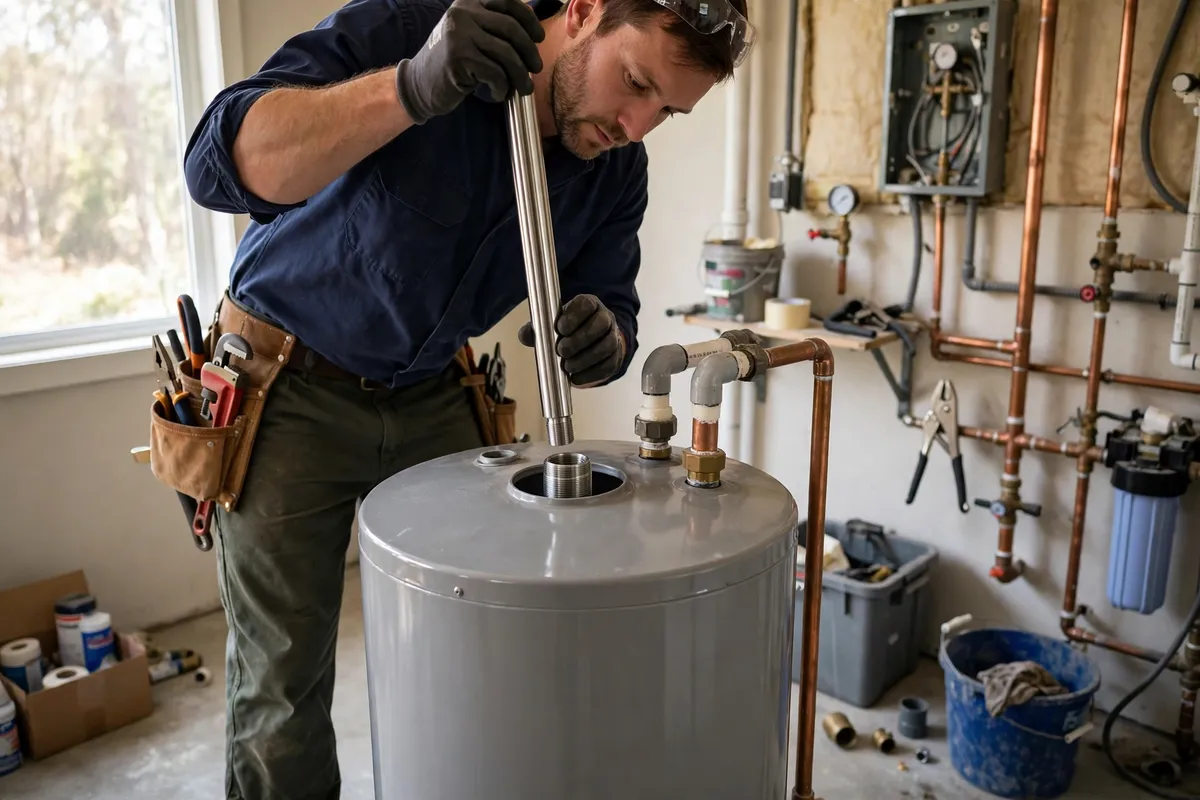
Anode replacement is the highest-value maintenance a tank owner can buy: a rod costs far less than a tank, and replacing it on schedule can extend a tank's life by years. The catch is access — rods are long, they seize in place after years of heat, and in low-clearance installations (attics, tight closets) a standard rod may not fit out at all. We carry segmented rods for tight spaces and we check clearance before quoting, so there are no surprises on the day.
Smelly hot water — a rotten-egg odour from the hot taps only — is sometimes blamed on the anode, and sometimes rightly: magnesium anodes can react with sulphur bacteria in well water or in certain municipal supplies. But odour has several causes, and swapping the rod type without diagnosing the water can waste money. We check whether the smell is hot-water-only, and whether bacteria or the rod is the driver, before recommending a change.
Don't Ignore These
Age alone is the best predictor — rods are consumed on a schedule, not on symptoms.
Cold water clear, hot water rusty: the tank lining may already be corroding because the anode is gone.
Can indicate anode–bacteria interaction. Diagnosis matters before swapping rod types.
Upfront & Simple
1
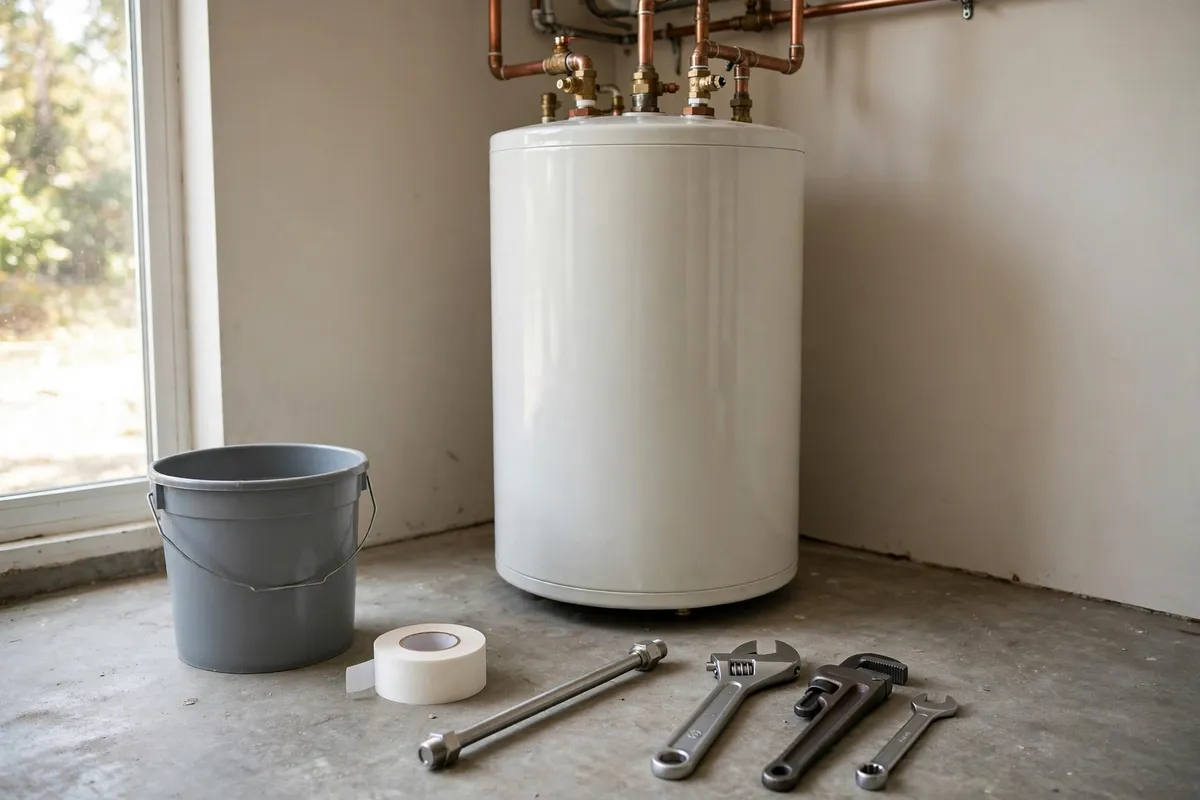
We pull and measure the rod — or check clearance and access if it cannot be removed safely.
2
Magnesium or aluminium, standard or segmented, matched to your water and space.
3
New rod fitted with proper sealing; tank refilled and checked for leaks.
4
We note the replacement date so the next inspection is on schedule, not forgotten.
Honest Pricing
Anode replacement is a small job in itself — the rod plus modest labour — but seized rods and tight access can add time, and a segmented rod costs more than a standard one. We quote after checking access, not before. Compared with a tank replacement, it is one of the best-value jobs in water-heater care, provided the tank itself is still sound.
You approve one price before any work begins — no surprise line items, and no work starts without your say-so. If a repair stops making sense next to the age of the unit, we will say so plainly and talk through replacement instead of pushing a repair.
Clarksville Plumber Repair Pro
Tell us what your water heater is doing — or not doing — and we will get a visit booked. You approve the price before any work begins.
Good To Know
Typically every 3–5 years, sooner in mineral-heavy water. Inspection, not the calendar alone, decides — a rod with life left stays in.
The tank rusts from the inside. Once rust shows in hot water or the tank leaks, the tank is finished — no rod can reverse that.
Magnesium protects more aggressively and is common; aluminium can be better where odour is an issue and lasts longer in some water. We match the rod to your water, not a one-size rule.
Often yes, with a segmented rod that bends through the access. We check headroom before quoting — a standard 4-foot rod needs 4 feet of clearance above the tank.
If rust is from a spent anode and the tank lining is still sound, it can stop further corrosion. If the tank is already rusted through internally, no rod saves it — replacement is the honest answer.
Clarksville Plumber Repair Pro
Tell us what your water heater is doing — or not doing — and we will get a visit booked. You approve the price before any work begins.
Brands We Service
Brand names are shown for identification only. We make no dealer or certification claim for any brand.